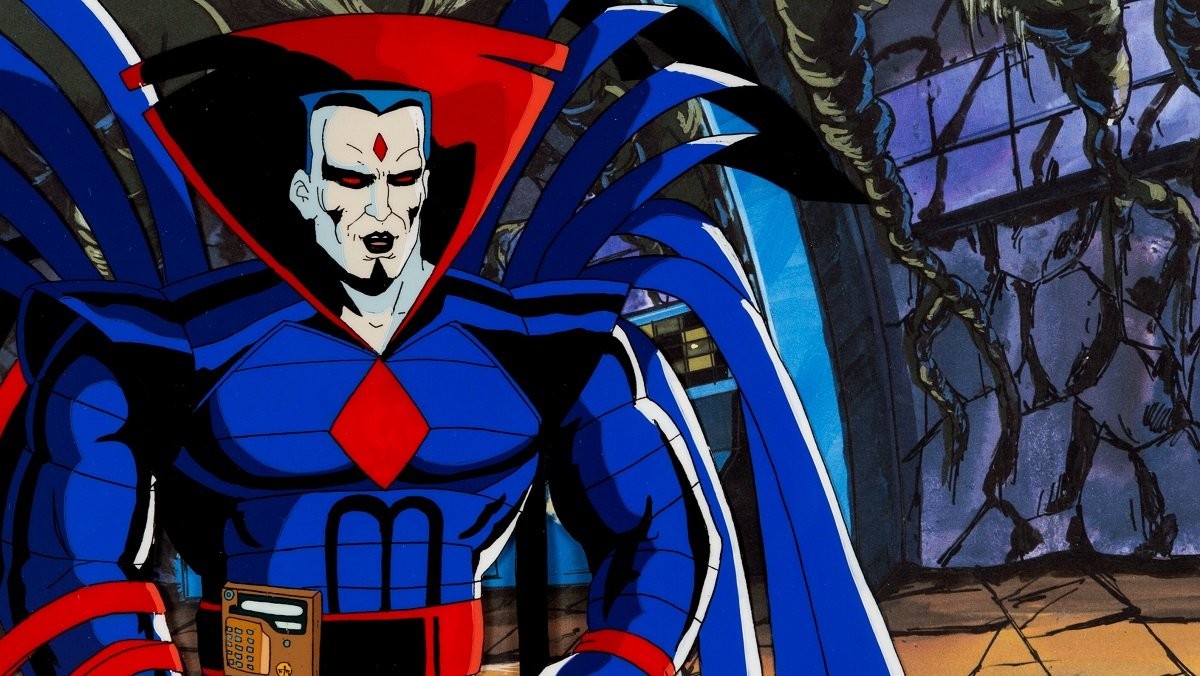
Mister Sinister has haunted the edges of X-Men stories since the late 1980s, and with Adam Driver joining the MCU as Nathaniel Milbury, the character is getting more attention than ever. I have gone through plenty of X-Men comics over the years, and Sinister always stood out to me because he does not behave like a typical villain. He is not trying to conquer the world or destroy the heroes. He is conducting research, and everyone around him is a potential specimen. That makes him colder and scarier than most of the enemies on the mutant roster.
Who Is Mister Sinister?
Mister Sinister is a supervillain in American comic books published by Marvel Comics. He was created by writer Chris Claremont and artist Marc Silvestri, and he first appeared in 1987. From that first appearance, he felt different from the rest of the X-Men rogues gallery because he looked like a gentleman from another century and talked like a man who had already figured out the future.
His real name is Nathaniel Essex. He is a Victorian-era scientist, and he carries that origin into everything he does. The way he speaks and dresses comes from that Victorian identity. Underneath the costume, he is a man who has spent his existence obsessing over mutant genetics, cloning, and the idea of engineering the perfect mutant.
The Creation of Mister Sinister
Chris Claremont and Marc Silvestri introduced Mister Sinister to Marvel readers in 1987, and the timing matters. The X-Men already had a deep bench of villains by then, but Sinister filled a role that no one else filled. He was not a warrior, a dictator, or a cosmic force. He was a scientist who treated evolution as a project he could manage and improve.
The character was built around a simple but terrifying premise. What if someone from the Victorian era had access to modern genetic knowledge and no moral restraint? That is Mister Sinister. He took the scientific arrogance of the nineteenth century and combined it with the resources of the Marvel universe's most advanced laboratories. The result is a villain who has never stopped experimenting.
He works with all the confidence of a man who believes he is right. The Marvel profile describes him as a Victorian scientist and mutant obsessive, and that obsession is the core of his character. The X-Men have faced plenty of villains who hated them for being mutants. Sinister is different because he sees mutants as raw material.
Nathaniel Essex and the Clone Question
What's confusing about Mister Sinister's lore is that Nathaniel Essex does not exist as a single person. The version that battles the X-Men most often is one of three clones of Nathaniel Essex. The other two are Doctor Stasis and Orbis Stellaris, and there is also Mother Righteous connected to that same group.
That detail changes how the character works. Once a villain can clone himself, death becomes less meaningful. The X-Men can defeat one version of Sinister and still face another one later. It also explains why he has been around for so many major X-Men stories without ever being permanently written out of the universe.
I remember the first time I ran across the clone reveal in the comics. It made me rethink all of his earlier appearances because it reframed the character as something closer to a concept than a person. The man in the Victorian costume is an idea that keeps reproducing itself.
What Does Mister Sinister Want?
Mister Sinister's goal is straightforward, but his methods are not. He wants to create the perfect mutant race. He believes that the future belongs to mutants, and he wants to control exactly what that future looks like. The Marvel character profile states that he uses his expertise in genetics to create that perfect race and procures his subjects by any means necessary.
That phrase, by any means necessary, covers a lot of horror. Sinister has performed cruel experiments upon many mutants in his quest. He does not see his test subjects as people. He sees them as data points in a long-running research program. That is what makes him such a disturbing villain. He is not angry or hateful. He is clinical.
His ideology makes him a particular kind of threat. A villain who wants to destroy mutants is simple to understand, and the X-Men know how to fight that. A villain who wants to perfect mutants by treating them as laboratory specimens is harder to stop because he does not announce his attacks. He works in the shadows, collecting samples, making clones, and waiting for his experiments to mature.
Why Mister Sinister Is a Dangerous Foe
The X-Men have faced cosmic entities, genocidal robots, and power-hungry dictators, but Mister Sinister sits in a special category. He is completely unconcerned with morality, and that gives him an advantage over heroes who care about right and wrong. He will sacrifice anyone to advance his research, including his own clones.
His longevity is another reason he is so dangerous. Because the version the X-Men fight is one of three clones, defeating him does not end the threat. There are other versions of Nathaniel Essex out there, each carrying the same obsession and the same willingness to experiment on mutants.
He also knows how to wait. A lot of villains have to make a big move every issue or every story arc. Sinister can plan for years, set up a scheme that only pays off decades later, and treat that timeline as completely normal. That patience, combined with his intelligence and his complete lack of empathy, puts him near the top of the X-Men's threat list.
Mister Sinister in Animation and the MCU
For fans who only know the X-Men from the animated series, Sinister can be confusing. There is a common question from people who watched the cartoon and saw him working with the Sentinels. Why would a mutant cooperate with mutant-hunting robots? That confusion is fair. Sinister does not follow ordinary alliances. He works with anyone who serves his research goals, and he discards them when they stop being useful.
Adam Driver is joining the X-Men universe as Nathaniel Milbury, the villain Mister Sinister. This news has generated a lot of discussion among X-Men fans, and it makes sense that Marvel would look to Sinister for the next era of mutant stories. He has the presence and the history that could fill the cinematic universe with stories for years to come.
