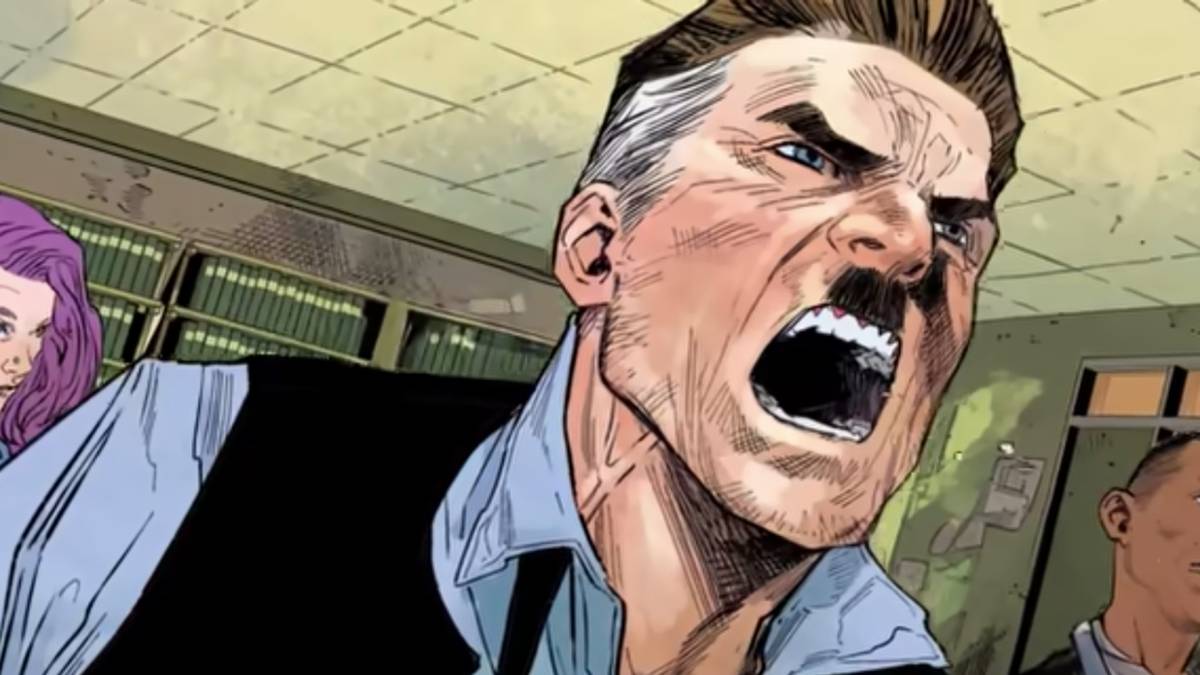
J. Jonah Jameson is the most recognizable flat-top in Marvel Comics, even though he has never thrown a punch or worn a mask. Created by Stan Lee and Steve Ditko and first appearing in The Amazing Spider-Man #1, March 1963, he is the man who prints the headlines, sets the public narrative, and shouts at Peter Parker from behind a desk buried in papers. Jameson is typically depicted as the publisher or editor-in-chief of the Daily Bugle, a fictional New York City newspaper, and his personal crusade against Spider-Man has shaped how New York sees the web-slinger.
He is the boss of Peter Parker. He is Spider-Man's harshest critic. And he has no idea that the shy photographer who brings him photos and the masked menace he writes about are the same person. That misunderstanding drives some of the best Spider-Man stories ever published. I have been reading those stories for years, and Jameson has always been the character who makes me laugh the most while also making Peter's life genuinely difficult.
Who Is J. Jonah Jameson?
Jameson is a complicated individual. He comes off as a bad-tempered, bossy, demanding, and loud old man, and that first impression is not entirely wrong. He is the chief editor and publisher of the Daily Bugle, a position that gives him real power in New York City. His opinion of superheroes is not very high, and he holds a longstanding grudge against Spider-Man that has never cooled.
His history explains some of that rough exterior. Jameson is the son of an abusive veteran, and he started his journalism career as a paperboy. That humble beginning carried him through the industry and eventually landed him as a copy boy for the Daily Bugle, a paper formerly edited by old man Jameson. When William Goodman's heirs put the Daily Bugle up for sale, Jameson tapped his last dollar and made the newspaper his own. The Bugle is not just a job to him. It is his life's work, and he protects it fiercely.
From Paperboy to Publisher
That rags-to-riches story matters. Jameson knows what it is like to work for everything he has, and he expects the same effort from everyone around him. He is demanding because he believes the news matters. He is loud because he thinks people need to hear the truth. And he is bitter because he has seen enough of the world to know that things do not always work out fairly. None of that excuses the way he treats his employees, but it explains where the anger comes from.
The War on Spider-Man
When the superhuman performer Spider-Man became a crimefighter, Jameson vowed to expose him as a publicity-seeking scofflaw. Those strong words define the entire relationship between the two characters. Jameson does not see a hero swinging between the skyscrapers. He sees a vigilante who operates outside the law and craves attention. His campaign runs on the front page of the Daily Bugle, and it creates endless trouble for both Spider-Man and his secret photographer.
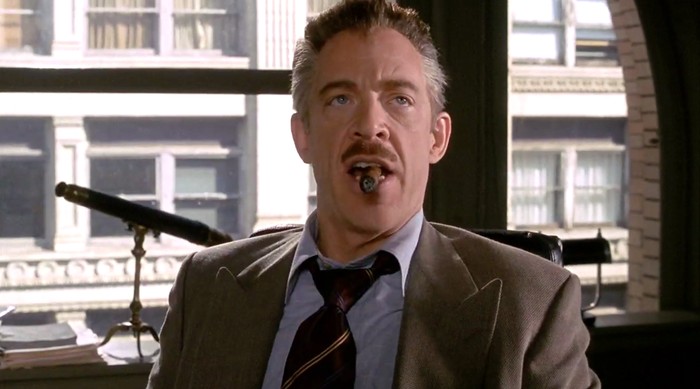
The attitude is captured perfectly in the 2002 Spider-Man film. Jameson roars at his staff: "Who is Spider-Man? He's a criminal that's who he is! A vigilante! A public menace! What's he doing on MY front page?" That outburst is as close to a mission statement as the character has ever had. In one scene, the entire history of Jameson's crusade is laid bare.
A Feud Built on Belief
Jameson's hatred of Spider-Man is rooted in his worldview. He sees the mask as proof that the man behind it cannot be trusted, and he genuinely believes that superheroes are a threat to public safety. The bitter irony is that Jameson relies on photos from Peter Parker, not knowing that he is employing Spider-Man himself. Every anti-Spider-Man editorial is funded by the very hero it attacks. Peter gets paid to document his own actions, and Jameson gets the photos that fuel his outrage. Neither man knows the truth, and that keeps the comedy alive.
Jameson as Peter Parker's Boss
In the comics, J. Jonah Jameson is the editor-in-chief at the Daily Bugle, the boss of Peter Parker, and Spider-Man's harshest critic. That triple role makes him one of the most important figures in Peter's life. Peter brings in Spider-Man photos, Jameson pays for them, and the cycle keeps both men exactly where they need to be. The relationship is tense and occasionally hilarious.
The comedy comes from the fact that Jameson never connects the dots. He yells at Peter for being late, complains about the photos, and then publishes them under headlines that call Spider-Man a menace. The reader is always in on the joke. Peter knows the truth, the audience knows the truth, and Jameson remains blissfully unaware. That dramatic irony has powered Spider-Man comics for decades.
J. Jonah Jameson in the Movies
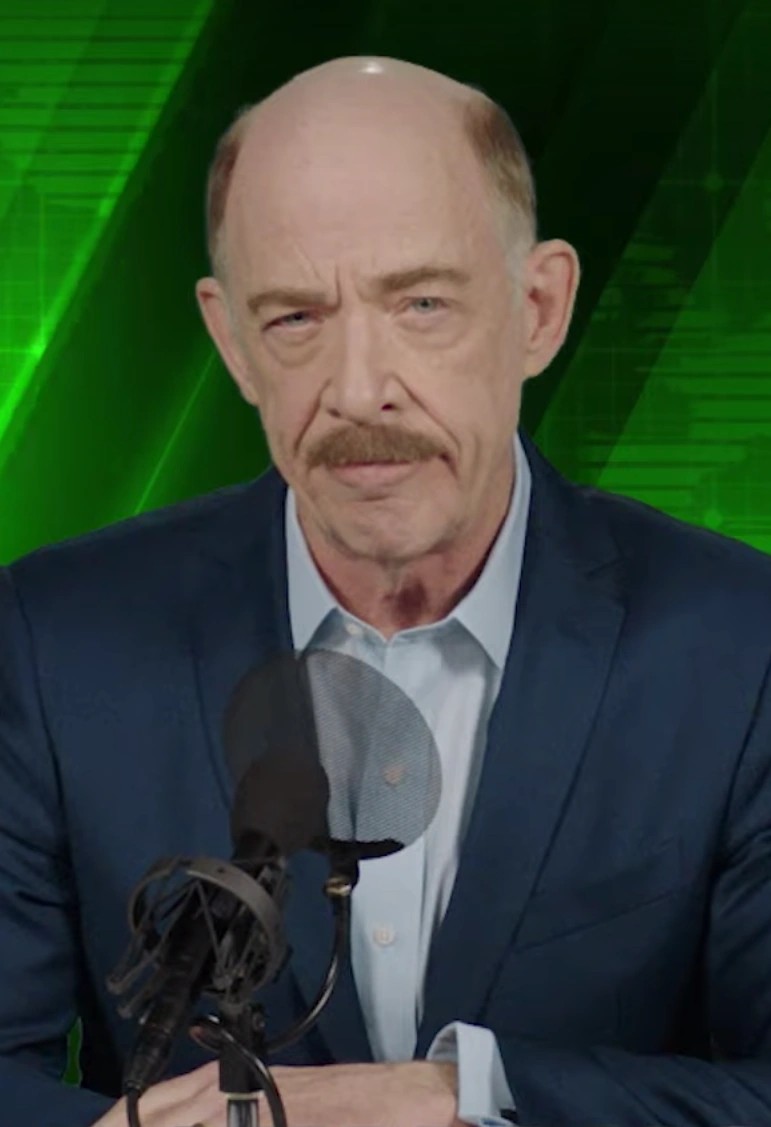 For most modern fans, J. Jonah Jameson has one face, and it belongs to J.K. Simmons. Simmons portrayed JJJ in Sam Raimi's Spider-Man trilogy and later brought the character into the Marvel Cinematic Universe. It is one of the few pieces of casting that fans have never seriously questioned. Simmons is so good in the role that it is hard to imagine anyone else sitting at that desk.
The 2002 film introduced Jameson to a generation that had never read the comics. His scenes steal the movie. He is loud and impatient, but more importantly, he is endlessly entertaining. As entertaining as he is, he never slips into caricature. When the MCU needed a Jameson, bringing Simmons back was the obvious choice, and I think it's one of the best casting decisions in the franchise. If only they would incorporate JJJ into the wider MCU.
Why the Performance Works
Simmons understands that Jameson is not a joke. He is a serious newspaperman with a serious grudge, and the humor comes from the gap between how he sees himself and how everyone else sees him. Jameson thinks he is the last honest man in New York. The audience knows he is a blowhard with a blind spot the size of the Daily Bugle. That contrast is what makes the performance so durable.
Why Jameson Endures
Jameson is not a supervillain. He has no powers, no army, and no grand scheme to take over the world. His weapon is the printing press, and his targets are the heroes who operate outside the system. That makes him a different kind of antagonist. He represents the media, the public, and the ordinary citizen who looks at a masked vigilante and asks hard questions.
There is a reason he has stuck around for so long. Spider-Man stories need stakes beyond the villain of the week. Jameson provides those stakes by making Peter Parker's civilian life difficult. He is the boss who never gives a break, the publisher who shapes public opinion, and the loud voice in the room who refuses to listen. Without him, Peter Parker would be a hero without pressure. With him, every issue carries a personal cost that makes the story richer.
