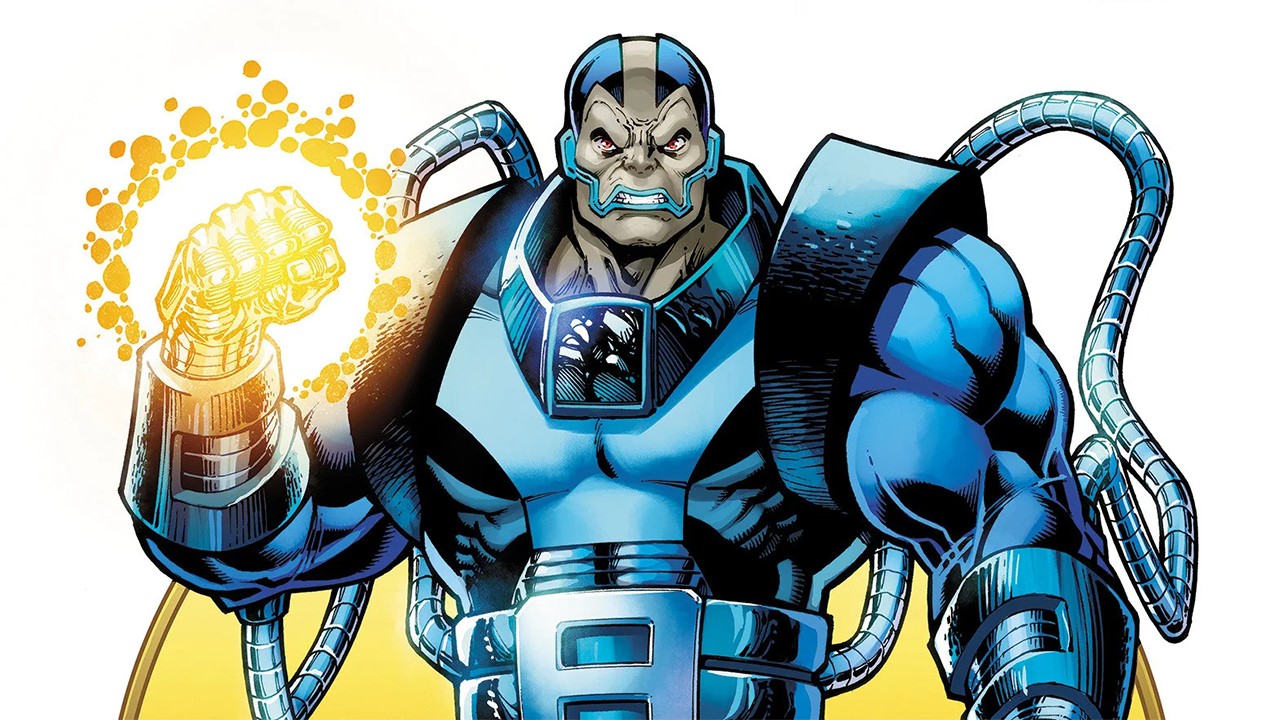
Comic fans know Apocalypse as one of the X-Men's oldest enemies, and I do mean oldest, but the name carries weight beyond Marvel Comics. The word itself comes from ancient religious writing and means revelation, not simply destruction. That distinction matters, because the character uses the idea of revelation in a very specific way. He sees himself not as a destroyer but as a judge, a force that tests humanity to expose what is weak and what deserves to survive.
Who Is Apocalypse in Marvel Comics?
Apocalypse was created by Louise Simonson and Jackson Guice. He debuted in X-Factor #5, 1986. Apocalypse, whose real name is En Sabah Nur, is a supervillain appearing in American comic books published by Marvel Comics. He is one of the world's first mutants, which makes him a figure of near-mythic importance in the X-Men universe. Mutants in Marvel lore are the next stage of human evolution, and Apocalypse has been around long enough to see countless generations rise and fall.
What makes him interesting as a villain is not just his power level. It is his philosophy. Apocalypse believes that only the strong deserve to survive, and he has spent centuries arranging situations that prove his point. He does not see himself as evil. He sees himself as a natural force, like a storm or a flood, that removes what cannot adapt.
One of the most consequential examples is Mister Sinister. In the comics, Apocalypse is the one who transformed the Victorian scientist Nathaniel Essex into the near-immortal Mister Sinister, binding him into centuries of service. That makes Apocalypse directly responsible for one of the X-Men's other great villains, and it is why the idea of Sinister working under him is rooted in real comic history rather than just the animated series.
How Apocalypse Tests Humanity
The X-Men Wiki describes Apocalypse as a figure who decides to examine the world and determine its conditions for testing. That is the core of his character. He does not attack randomly. He studies, he plans, and then he creates situations that force people to show their true nature.
One documented example comes from his interactions with the terrorist known as Moses Magnum. Apocalypse grants superhuman powers to Magnum, turning him into a force that can cause massive destruction. Why would he do that? Because Magnum, in Apocalypse's view, represents something real. Magnum has the will to use power, and Apocalypse respects that, even if the results are catastrophic for everyone else.
This pattern repeats throughout his history. He identifies people who have the potential to survive, gives them the tools to test themselves, and then watches what happens. He is less interested in ruling the world than in proving that his philosophy is correct.
Why Apocalypse Works as an X-Men Villain
The X-Men have always been about the fear and wonder of mutation. Some people see mutants as the next step in human evolution, while others see them as a threat to be eliminated. Apocalypse takes that idea to its extreme. He would argue that the fear is justified and that the only real question is who will be left standing when the weak are gone.
That makes him a perfect mirror for the X-Men. They fight for peaceful coexistence between humans and mutants. He fights for the triumph of the strong over the weak. Both sides believe in the importance of mutantkind, but they disagree completely on what that importance means. Apocalypse is not just a powerful enemy. He is an ideological one, and that gives the stories a weight that a simple punch-up would not have.
I have always found that aspect of the character more interesting than his raw power. His age matters too. As one of the world's first mutants, he has seen, and sometimes caused, the rise and fall of empires. That perspective shapes his worldview. He has watched humanity repeat the same mistakes for thousands of years, and he has concluded that the only thing that ever changes anything is force.
Apocalypse and the Idea of Revelation
Going back to the religious roots of the word, an apocalypse is a vision of the suffering that people go through before the happy resolution. The word means revelation, and in that tradition, the suffering is not the point. The point is what comes after, the moment when the truth is finally made clear.
That idea maps onto the Marvel character. Apocalypse puts people through hell, but he believes he is doing them a favor. He is revealing their true nature, showing them what they are capable of, and separating the worthy from the unworthy. The suffering is just the process. The revelation is the goal.
It is a dark philosophy, but it is also a coherent one. That is what makes Apocalypse such a durable villain. He is not chaotic. He is not random. He has a code, and he follows it with terrifying consistency. For a comic book villain, that is rare and valuable.
Apocalypse in Live Action
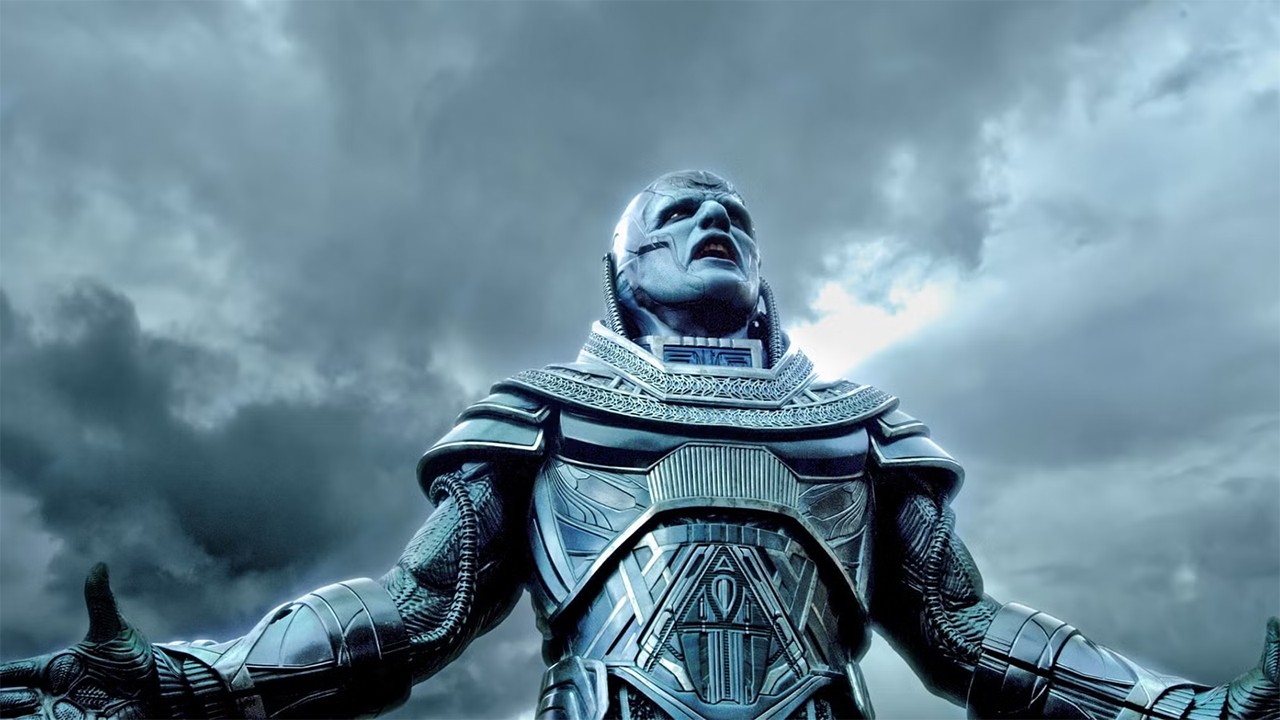
Apocalypse made his live action debut in X-Men: Apocalypse in 2016, played by Oscar Isaac. The film cast him as the world's first mutant, worshipped as a god in ancient Egypt, who wakes in the 1980s and recruits four Horsemen to tear down the modern world and rebuild it in his image. Isaac played the role under heavy prosthetics and blue makeup, which drew a lot of discussion at the time about how much of his performance was buried under the design. I think Apocalypse was a fine character in an otherwise not so outstanding movie. The film was the third in the First Class timeline, following Oscar Isaac's Apocalypse against the younger versions of the X-Men.
If Mr. Sinister isn't the big bad of the next phase of the Marvel Cinematic Universe, then I think Apocalypse will be. I could even see Sinister working for Apocalypse like he did in the comics and X-Men: The Animated Series. He has a rich enough history and if done right, they would need more than just the X-Men to stop him. He has what it takes to be an Avengers' level threat.
Apocalypse in Animation
Animation has arguably served Apocalypse better than the movies. He appeared in the 1990s X-Men: The Animated Series, where his booming voice and time-spanning schemes made him one of the show's most memorable threats, and he factored into the fan-favorite Beyond Good and Evil arc. He returned in X-Men '97, the 2024 revival, in a run that leaned hard into his ancient-Egyptian origins and his connection to the wider mutant story. Seeing what he did to Magneto was mind-blowing. I thought Wolverine losing his adamantium was the most shocking thing X-Men 97 could do... I was wrong. I was so wrong. Across both shows, the animated Apocalypse gets to be exactly what the comics made him, a patient, god-like force who has watched civilizations rise and fall, rather than a villain the story has to rush through in a single film.
Why the Name Still Matters
There is a reason Marvel chose the name Apocalypse for En Sabah Nur instead of something more generic. The name connects the character to a long tradition of apocalyptic thinking, and it tells readers exactly what he is about before they even open the book. He is a revelation. He is the force that exposes the truth, no matter how painful that truth might be.
That is also why the character stays relevant. The questions he raises about strength, survival, and the cost of progress are not going anywhere. They are the same questions that apocalyptic literature has been asking for thousands of years, and they are still worth asking today.
For fans of the X-Men, Apocalypse represents the ultimate test. He pushes the heroes to their limit and forces them to decide what they are really fighting for. He is a villain, without question, but he is a villain with a purpose, and that purpose is written into his name.
