Marvel, Marvel Cinematic Universe
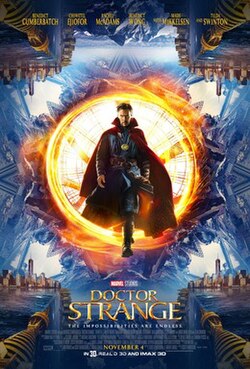
Doctor Strange follows Stephen Strange, a brilliant and deeply arrogant neurosurgeon whose hands are destroyed in a car crash on a rain-soaked road. His career is the only thing he ever valued, and once his hands stop cooperating, the identity he built collapses. After burning through his fortune chasing experimental surgeries that go nowhere, he hears about a paralyzed man who somehow walked again, which sends him to Kathmandu and a hidden enclave called Kamar-Taj.
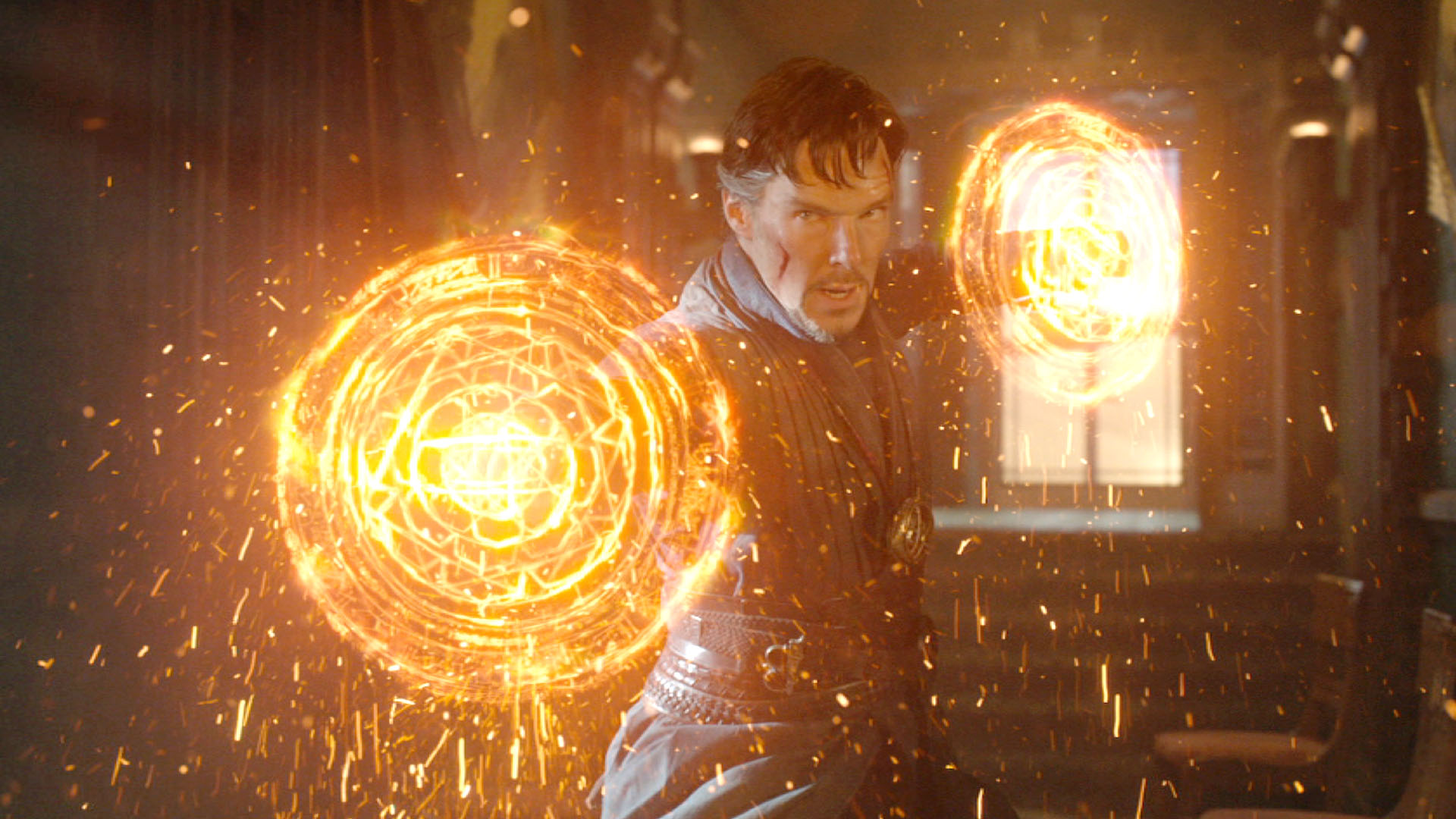
What he finds there is not physical therapy. The Ancient One introduces him to the mystic arts, astral projection, portals, and a version of reality that runs on more than the string theory and quantum mechanics he used to lecture about. The film tracks a selfish man who came to Kamar-Taj to fix his hands and ends up becoming the person who defends reality itself.
Benedict Cumberbatch as Stephen Strange
Benedict Cumberbatch plays Stephen Strange. He leans into the arrogance early, rattling off medical trivia and correcting people mid-sentence, then slowly sands that arrogance down as the mystic arts humble him. Cumberbatch also voices Dormammu, so the hero and the cosmic threat are technically the same actor, which is a bit of trivia most people miss on a first watch.
Tilda Swinton as the Ancient One and Kamar-Taj
Tilda Swinton plays the Ancient One, the Sorcerer Supreme who runs Kamar-Taj and takes Strange on as a student. Her casting drew real criticism, since the comics character is Tibetan and Marvel cast a white actress in the role, and that conversation followed the film everywhere. The reveal that she has been drawing power from the Dark Dimension complicates the mentor role and sets up Mordo's later turn. Kamar-Taj itself is the home base for the mystic arts, a place with rules and a library guarded by Wong.
Mads Mikkelsen as Kaecilius and Dormammu
Mads Mikkelsen plays Kaecilius, a former student of the Ancient One who breaks away after losing people he loved and decides eternal life inside the Dark Dimension beats living and dying in the real world. Kaecilius is the door to Dormammu, the cosmic threat from the Dark Dimension that the movie is building toward. Dormammu wants to pull Earth into his realm, and the climax hinges on stopping that.
The Eye of Agamotto and the Time Stone
The Eye of Agamotto holds the Time Stone, one of the six Infinity Stones, though the movie plays coy about that connection until later movies pay it off. Strange uses it to rewind and loop time, and the climax hinges entirely on that power. Rather than a sky-beam brawl, Strange flies into the Dark Dimension, confronts Dormammu, and traps them both in a time loop, dying over and over so that Dormammu is forced to relive the same moment forever until he gives up. The line "Dormammu, I've come to bargain" comes from this scene.
One of my biggest gripes about the MCU is the fact that the villains usually die. I understand that they probably don't want to reuse the same villains for future movies, but villains like Ultron, and the Mandarin should not have been killed after just one movie. The way that Dormammu is handled is great though. He has not appeared again, but there's always a chance to bring him back and that unknowing of if or when he will be back is better than just knowing he's dead.
The Supporting Cast: Mordo, Wong, and Christine Palmer
Chiwetel Ejiofor plays Karl Mordo, who starts as Strange's ally and ends the film disillusioned, setting up the mid-credits turn where his belief that there should be no sorcerers at all curdles into something dangerous. Benedict Wong plays Wong, the keeper of the library, who lands most of the film's driest comic moments. Rachel McAdams plays Dr. Christine Palmer, Strange's colleague and former partner, who tethers him to the life he left behind.
Where Doctor Strange Fits in the MCU
Doctor Strange is the fourteenth film in the Marvel Cinematic Universe and the second of Phase Three, released November 4, 2016. It matters to the larger story for two reasons. First, it puts the Time Stone on the board ahead of Avengers: Infinity War. Second, it introduces magic as a load-bearing part of the MCU that every Multiverse story since has leaned on. The two post-credits scenes handle the setup, with Thor turning up to ask Strange for help finding Odin, and Mordo stripping a former sorcerer of his power as his fall begins.