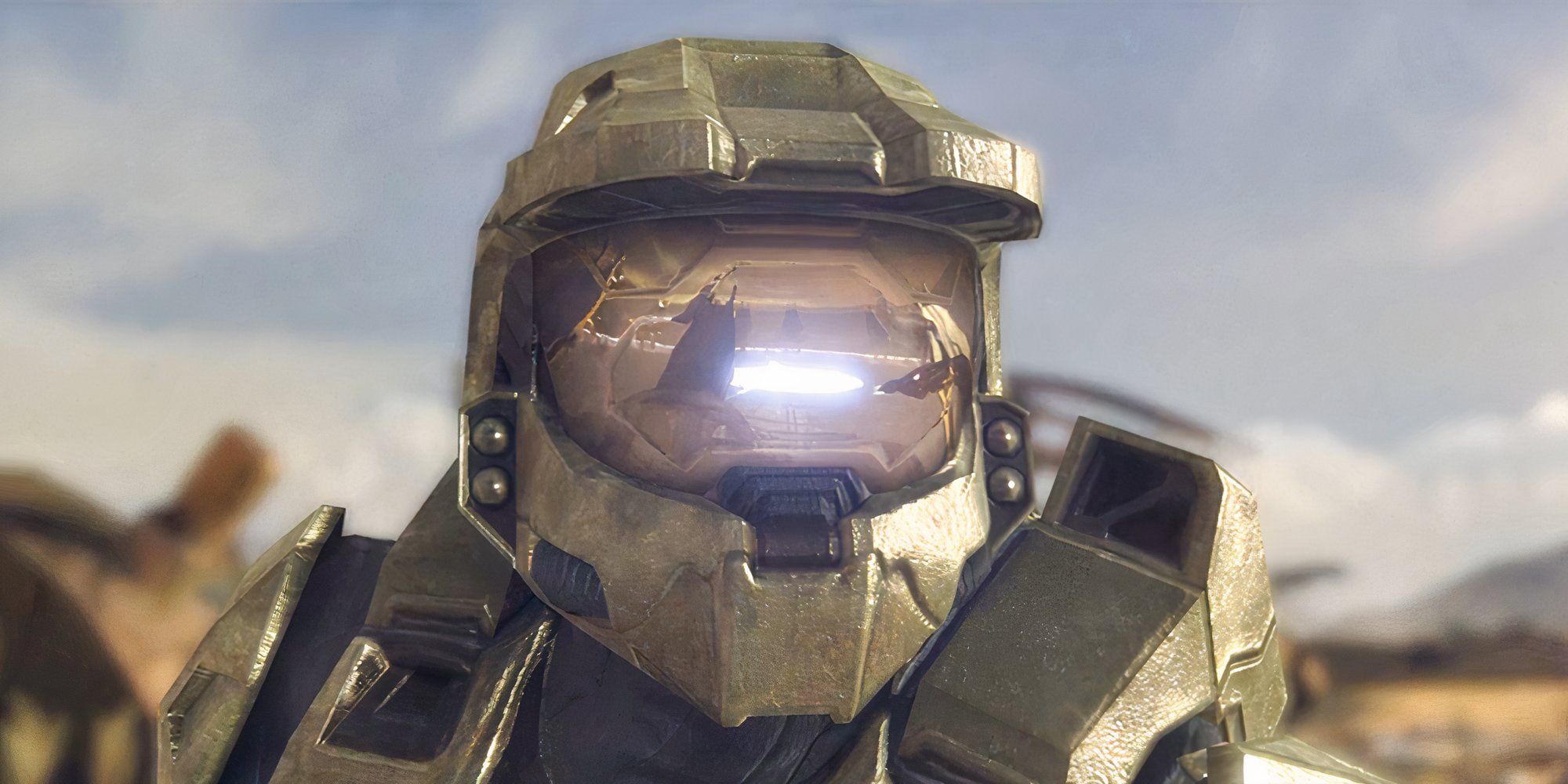
Master Chief Petty Officer John-117, known to almost everyone simply as Master Chief, is the face of the Halo franchise. He is one of the most recognizable characters in gaming history, up there with Mario and Link. Voiced by Steve Downes across the mainline games, Master Chief is the rare protagonist who works precisely because so little of him is visible. The helmet stays on. The face stays hidden. What you get instead is a soldier defined entirely by what he does, and what he does across six mainline games is save humanity repeatedly, no matter the personal cost.
Master Chief's Origin: The Spartan-II Program
John was born on March 7, 2511, on the colony world of Eridanus II. He was six years old when Dr. Catherine Halsey identified him as a candidate for the SPARTAN-II Program, a classified military initiative designed to create the perfect supersoldier. He was conscripted, taken from his family, and would not have a normal childhood again. Along with 32 other recruits he underwent years of brutal training followed by biological and mechanical augmentations that made him stronger, faster, and more durable than any ordinary human. Ceramic grafting hardened his bones. Muscle enhancement pushed his physical capability far beyond human limits. Enhanced reflexes gave him reaction times that no unaugmented soldier could match.
The program worked. John emerged as the natural leader among the Spartan-IIs, designated Sierra-117, and spent the next several decades as one of the UNSC's most effective and decorated soldiers. By the time the Human-Covenant War began in earnest he had already earned every known UNSC medal except the Prisoner of War Medallion, a detail that says everything about how he operates.
Master Chief in Halo: Combat Evolved (2001)
The first game drops Master Chief into the middle of a crisis with almost no setup. The UNSC ship Pillar of Autumn stumbles onto a massive Forerunner ring structure, Installation 04, while fleeing the Covenant. Master Chief survives the crash landing and almost immediately becomes the last line of defense against both the Covenant and the Flood, a parasitic organism that had been contained on the ring for thousands of years. He discovers that the Halo rings are not weapons against the Flood but weapons against all sentient life, designed to starve the Flood by eliminating their food source. He destroys Installation 04 by detonating the Pillar of Autumn's reactor and escapes with Cortana, the AI who becomes his closest companion across the series.
Master Chief and Cortana
Cortana is the emotional core of Master Chief's story in a way that the games handle better than most players give them credit for. She is an AI constructed from a copy of Dr. Halsey's own brain, and her relationship with John develops across the original trilogy into something that sits somewhere between partnership and genuine friendship. She is the one who knows his name. She is the one he comes back for. Halo 4 makes the cost of that relationship explicit when Cortana begins experiencing rampancy, the condition that causes AIs to deteriorate and eventually fail. Watching Master Chief face losing Cortana is the most emotionally direct the series ever gets with him, and it works because the games spent three entries building what she means to him.
Master Chief Across the Halo Trilogy
Halo 2 (2004)
Halo 2 splits the story between Master Chief and the Arbiter, a disgraced Covenant Elite who becomes an unlikely ally. Master Chief spends the game chasing the Prophet of Truth toward Earth and eventually onto the Ark, the installation that controls all the Halo rings. The game ends on a cliffhanger that was controversial at the time and has aged into something that feels appropriately ambitious for the scale of the story being told.
Halo 3 (2007)
Halo 3 closes the original trilogy with Master Chief finishing the fight, as the marketing put it. He activates a replacement Halo ring to stop the Flood, escapes on a ship that gets caught in the slipspace portal, and drifts in the wreckage for years before the events of Halo 4. The ending, where Cortana reaches out and touches his armor and he lets her, is one of the quieter and more affecting moments in the series.
Halo 4 (2012) and the Reclaimer Saga
Halo 4 picks up four years after Halo 3 with Master Chief adrift in space and Cortana deteriorating. The game introduces the Forerunner warrior the Didact as the primary antagonist and ends with Cortana sacrificing herself to save Master Chief. It is the most character-focused the series had been up to that point and set up a trilogy that Halo 5 did not fully deliver on. Halo Infinite returned Master Chief to a more grounded story on Zeta Halo, rebuilding after the losses of the Reclaimer Saga with a new AI companion named The Weapon.
Halo Campaign Evolved and What Comes Next
Halo Studios, formerly known as 343 Industries, announced Halo: Campaign Evolved for 2026 on Xbox and Windows, with a simultaneous release on PlayStation 5 marking the first time a mainline Halo game has launched on a Sony platform. Master Chief is once again front and center in this new remake of the original Combat Evolved.
Other remakes of the other games in the series are also rumored to be in the works. A sequel to Infinite is more than likely to be coming as well.
Master Chief in the Halo TV Series
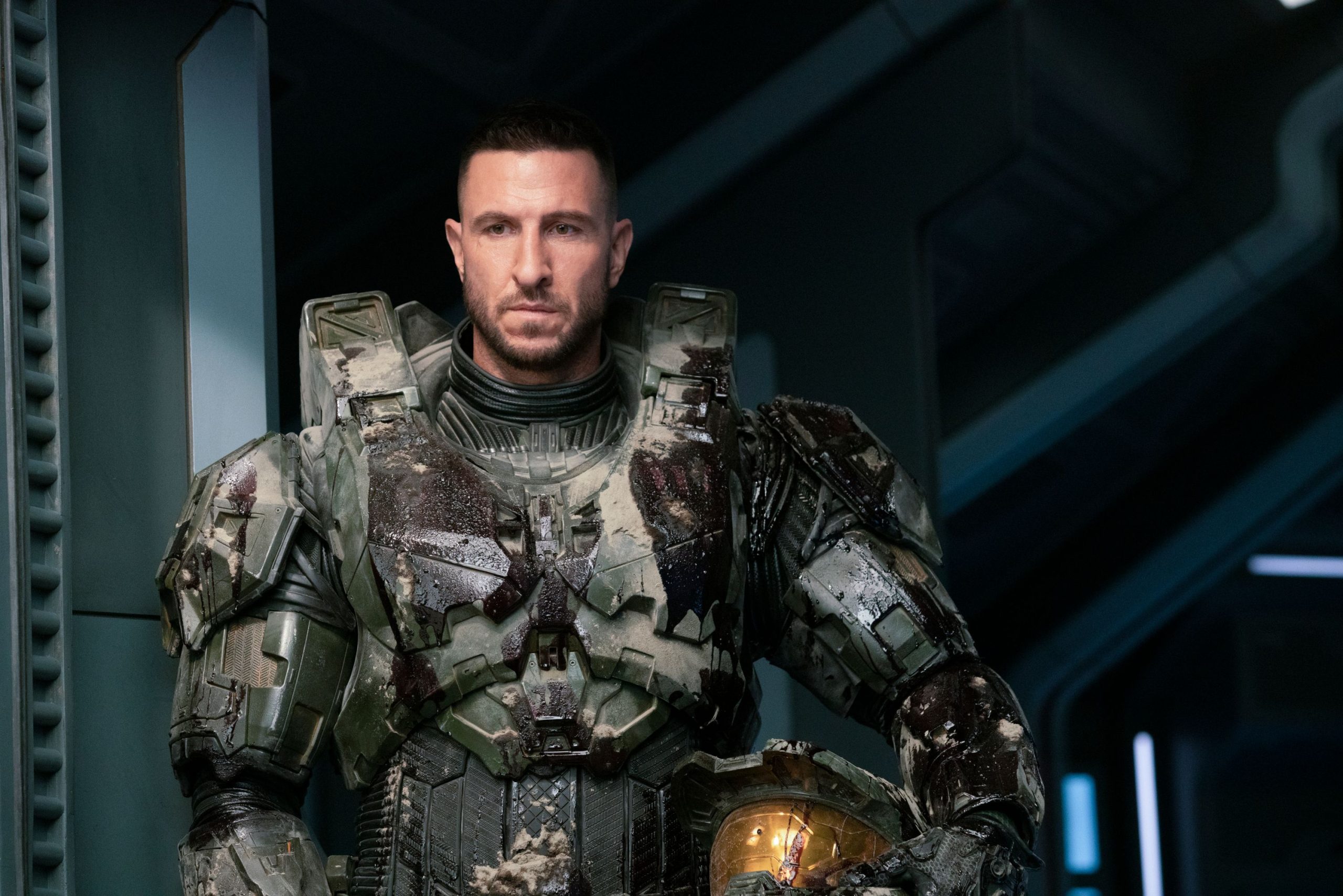 Pablo Schreiber plays Master Chief in the Halo television series, which takes significant creative liberties with the source material including removing the helmet far more frequently than the games ever did. The show exists in a separate continuity called the Silver Timeline and has divided the fanbase considerably. It is a different interpretation of the character rather than a direct adaptation. Paramount+ cancelled the series after two seasons in 2024, citing the show's high cost more than viewership, and both seasons moved to Netflix in October 2025, giving Halo a much larger potential audience than it ever had on Paramount+.
